

Summary
- What is it? A cultural corridor unifying monumental caravanserais and mosques within the Seljuk menzil system, facilitating Silk Road trade across medieval Anatolia [1], [2].
- Route: A 380-km historical route extending from Lake Beyşehir’s shores through Konya Plain and Tuz Lake to Aksaray, thence crossing the Cappadocia threshold into Kayseri and Bünyan valleys [1], [2], [4].
- Key Structures: Eşrefoğlu Mosque (Beyşehir), Sultan Han (Aksaray), Döner Kümbet (Kayseri) and Karatay Han (Bünyan) [1], [2], [3], [4].
- Recommended Duration: 3 days (Day 1: Beyşehir–Konya menzil; Day 2: Aksaray Sultan Han and plain caravanserais; Day 3: Kayseri city center and Karatay Han) [1], [2].
The Silk Road and Seljuk Menzil System
In the 13th century, the Seljuk State of Anatolia constructed a global trade network connecting Black Sea ports (Sinop, Trabzon) with Mediterranean ports (Antalya, Alanya), and eastern routes to Tabriz and Iranian caravanserais [1]. The heart of this network lay in the plains between Konya—the Seljuk capital—and Kayseri, a major depot for eastern trade [1], [2].
The Seljuk caravan security system relied on fortified ribats and hans spaced at 30–40 km intervals (one menzil), corresponding to the daily travel distance of camel caravans [1]. These structures provided free lodging, meals, blacksmithing, and medical care for three days without regard to religion, language, or ethnicity, operating under state-backed caravan insurance mechanisms [1], [2]. Losses due to banditry or storms were directly compensated by the treasury [1].
This corridor begins at Beyşehir, where cypress-scented forests meet the arid Bozkır steppe [3]. It traverses Konya’s salt plains to reach Sultan I. Alâeddin Keykubad’s masterpiece, Aksaray Sultan Han [2], and continues through the volcanic silhouettes of Hasan Dağı and Erciyes Dağı to Kayseri’s Döner Kümbet and finally to Bünyan Karatay Han, the last great fortress-sarai linking to Malatya-Iran routes [4], [5].
Route Stops and Architectural Evolution
Structures along this route illustrate all phases of Seljuk architecture, from wooden construction to monumental stone carving and geometric ornamentation [1], [2], [3], [4], [5]:
1. Stop: Beyşehir Eşrefoğlu Mosque (Timber-Framed Mosque)
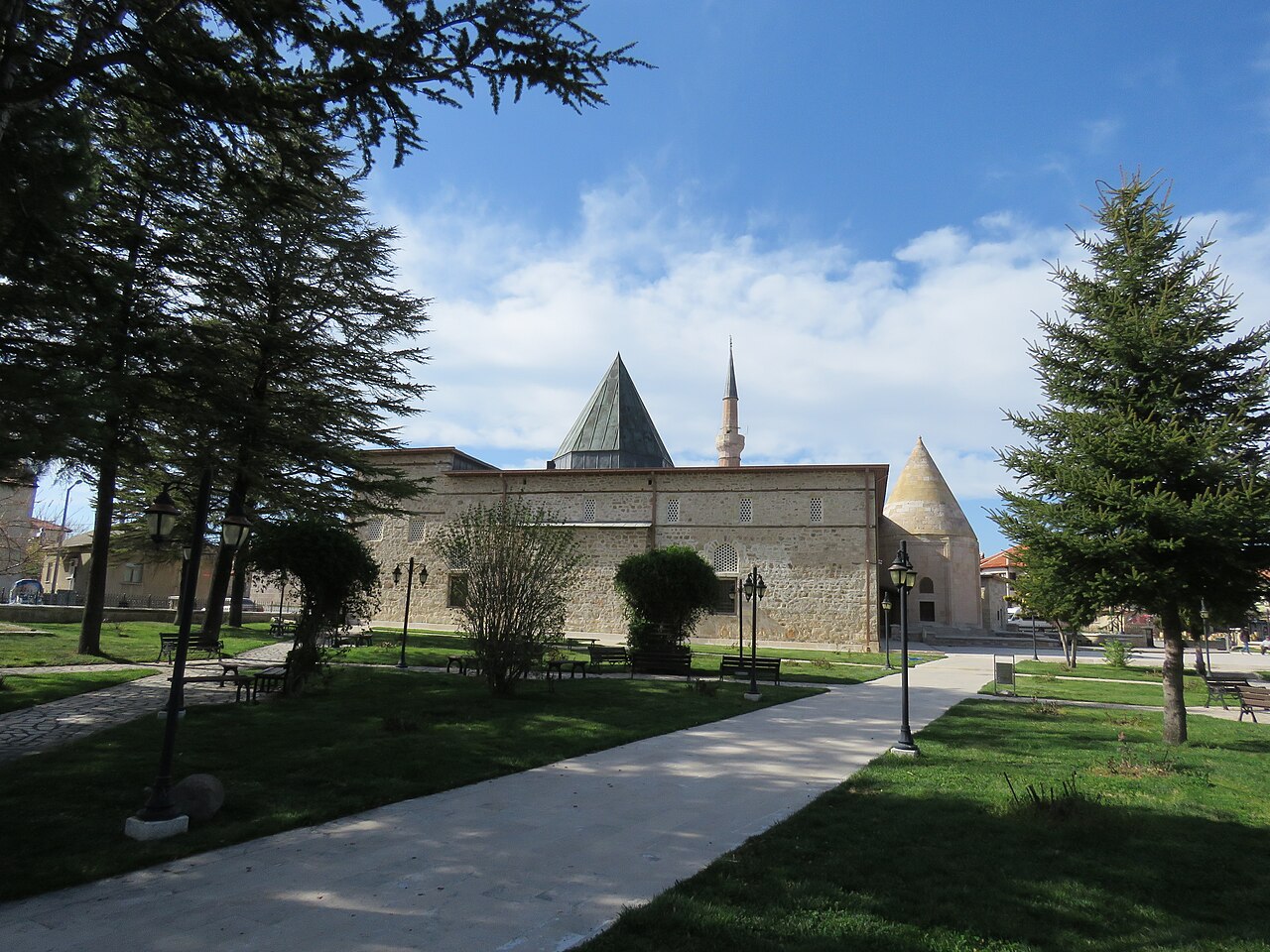
The westernmost menzil opens at the 1299 masterpiece of the Eşrefoğulları Principality [3]. This UNESCO World Heritage Site features 48 monumental cedar pillars, a hypostyle hall with an octagonal kiosk mosque, a central snow pit (karlık), and a nail-free wooden minbar—Anatolia’s best-preserved timber hypostyle structure [3]. Pilgrims refresh spiritually and architecturally at this lakeside vantage before embarking on the caravan route.
2. Stop: Aksaray Sultan Han (The Marble Fortress of Bozkır)
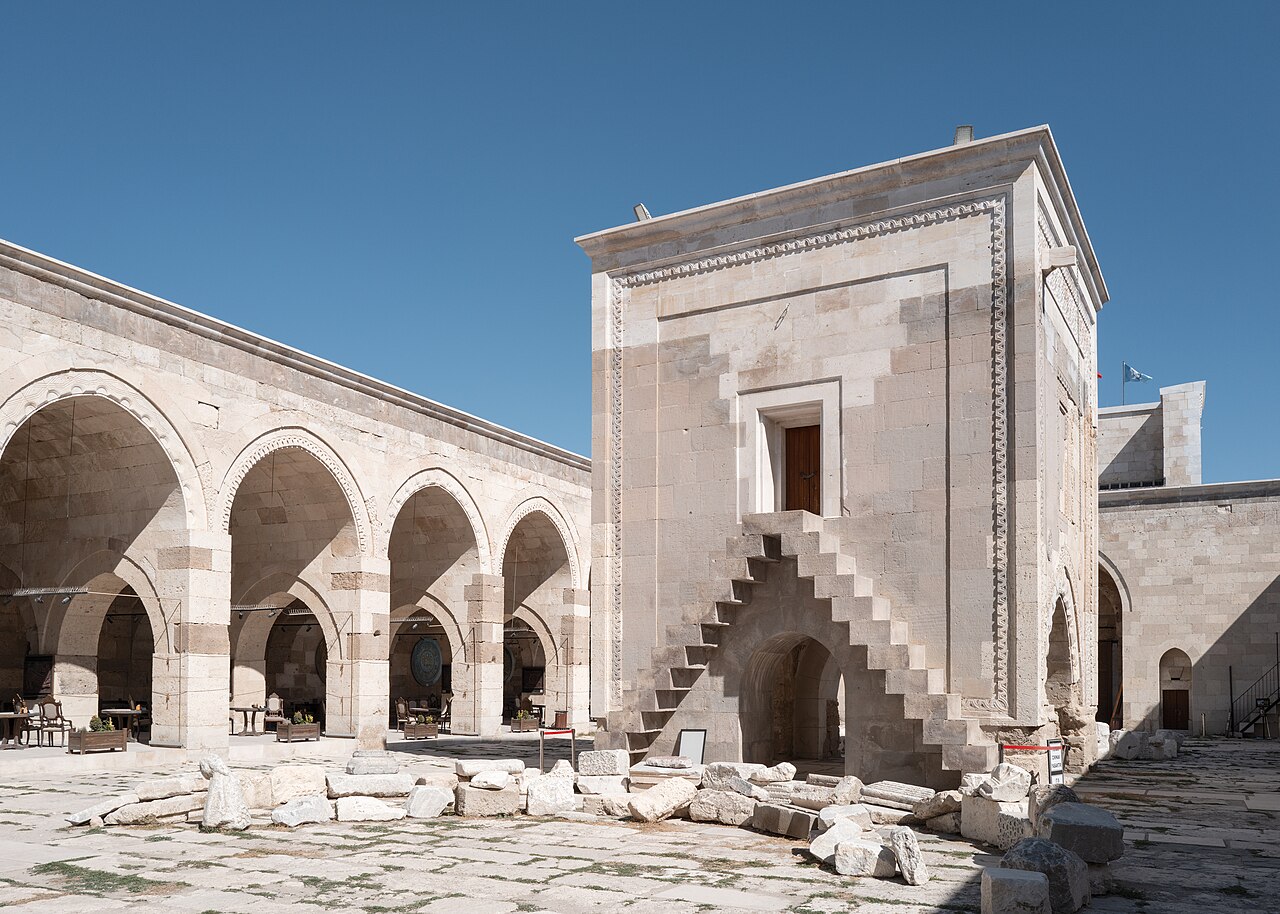
Rising centrally along the Konya–Aksaray road, Sultan Han (1229) is Anatolia’s largest caravanserai (~4,800 m²) [2]. Its marble zigzag-patterned monumental portal (taçkapı), central courtyard with elevated kiosk mosque (köşk mescit), and 32-pier winter hall (hol) transform it into a full-fledged menzil fortress [2]. Interior spaces include baths, stables, guard rooms, and storage facilities.
3. Stop: Kayseri Döner Kümbet (The Stone Tent of Bozkır)
At the Kayseri junction, the caravan encounters Döner Kümbet (~1276) opposite Seyyid Burhaneddin’s tomb on the Talas Road [5]. Commissioned by Şah Cihan Hatun, this funerary tower features a square base transitioning to a dodecagonal (twelve-sided) cylindrical body and conical roof, adorned with stone reliefs of double-headed eagles, tree-of-life motifs, and human-headed winged figures—embodiments of Seljuk nomadic tent architecture transposed into permanent stone [5].
4. Stop: Bünyan Karatay Han (The Last Fortress at the Eastern Threshold)
Along the route diverging toward Sivas and Malatya, Vizier Celâleddin Karatay completed Karatay Han in 1240 [4]. Its 18 massive towers, intricate muqarnas portals, and fantastical intertwined dragon-human-bull reliefs on the closed hall portal exemplify the audacity of Turkish stone sculpture [4]. The complex’s mosque, tomb, and bathhouse demonstrate the flawless operation of Seljuk waqf endowments.
Three-Day Itinerary and Driving Route
A 3-day driving itinerary is ideal for a comprehensive exploration of the corridor [1], [2]:
-
Day 1 (Beyşehir–Konya / 90 km):
- Morning: Visit Beyşehir Eşrefoğlu Mosque. Examine mukarnas-crowned wooden columns, snow pit, and glazed mihrab [3].
- Afternoon: Drive from Beyşehir Lake to Konya. Brief stop at Seljuk-era Karatay and İnce Minareli Medreses.
- Evening: Overnight stay in Konya.
-
Day 2 (Konya–Aksaray / 145 km):
- Morning: Travel via D300 highway toward Aksaray. Follow flat plains and ancient caravan traces.
- Lunch: Arrive at Aksaray Sultan Han. Explore marble portal, kiosk mosque, and winter hall vaults [2].
- Evening: Transition to Ihlara Valley (Cappadocia foothills) via Aksaray city; overnight stay.
-
Day 3 (Aksaray–Kayseri–Bünyan / 150 km):
- Morning: Arrive in Kayseri with views of Erciyes Dağı. Visit Döner Kümbet, photographing tree-of-life and eagle reliefs [5].
- Afternoon: Travel east toward Bünyan. Examine Karatay Han’s dragon-adorned portal, bathhouse, and waqf details [4].
- Evening: Return to Kayseri and complete the route.
Harita
Harita: © OpenStreetMap katkıcıları. Bu yazıda anılan bazı yapılar ve kendi yazıları:
- 1. Durak: Beyşehir Eşrefoğlu Camii
- 2. Durak: Gök Kubbenin Çinili Aynası: Konya Karatay Medresesi
- 3. Durak: Taşa Kazınan Âyetler: Konya İnce Minareli Medrese
- 3. Durak: Bir Vezirin Nüfuz ve Mimari İmzası: Konya Zazadin Hanı
- 4. Durak: Aksaray Sultan Hanı
- 5. Durak: Taşın Geometrik Kalesi: Ağzıkara Han Kervansarayı
- 6. Durak: İpek Yolu
- 7. Durak: Kayseri Döner Kümbet: Şah Cihan Hatun
- 8. Durak: Bünyan Karatay Hanı
- 9. Durak: Bozkırda Taşın Hendesesi: Kayseri Sâhibiye Medresesi
- 10. Durak: Tıbbın ve Merhametin Çifte Abidesi: Kayseri Gevher Nesibe Dârüşşifâsı
- 11. Durak: Cacabey Medresesi
- 12. Durak: Tyana Su Kemerleri ve Antik Kenti
Visit Notes
- Road Conditions: The Beyşehir–Konya–Aksaray–Kayseri corridor is fully divided state highway (D300/D330); driving comfort is high.
- Climate & Preparation: Central Anatolian steppe summers are hot and dry, winters harsh and windy. Optimal travel months: April–June and September–October.
- Access Conditions: Mosques are open during prayer hours; current visiting hours and restoration works for caravanserais and monuments should be confirmed via the Turkish Ministry of Culture and Tourism and local authorities.
References
- [1] “KERVANSARAY” — TDV İslâm Ansiklopedisi, Vol. 25 (Prof. Dr. Rahmi Hüseyin Ünal) — https://islamansiklopedisi.org.tr/kervansaray
- [2] “SULTAN HANI” — TDV İslâm Ansiklopedisi, Vol. 37 (Prof. Dr. Semavi Eyice) — https://islamansiklopedisi.org.tr/sultan-hani—aksaray
- [3] “EŞREFOĞLU CAMİİ” — TDV İslâm Ansiklopedisi, Vol. 11 (Dr. Doğan Yavaş) — https://islamansiklopedisi.org.tr/esrefoglu-camii
- [4] “KARATAY HANI” — TDV İslâm Ansiklopedisi, Vol. 24 (Prof. Dr. Rahmi Hüseyin Ünal) — https://islamansiklopedisi.org.tr/karatay-hani
- [5] “DÖNER KÜMBET” — TDV İslâm Ansiklopedisi, Vol. 9 (Prof. Dr. Semavi Eyice) — https://islamansiklopedisi.org.tr/doner-kumbet
Stops along the Route (12)
Beyşehir Eşrefoğlu Mosque
The Glazed Mirror of the Celestial Dome: Konya Karatay Madrasa
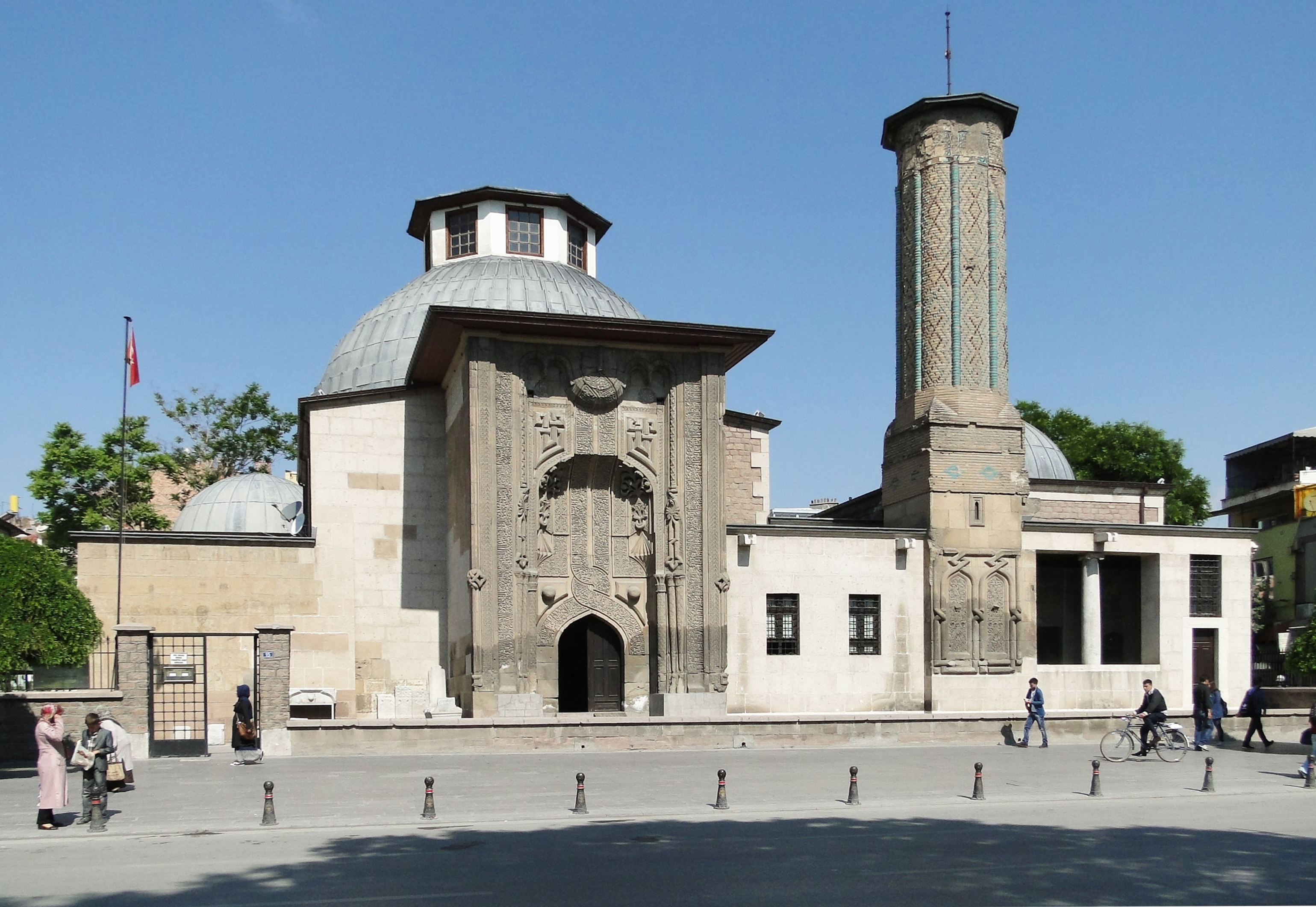
Inscribed Verses on Stone: Konya İnce Minareli Madrasa
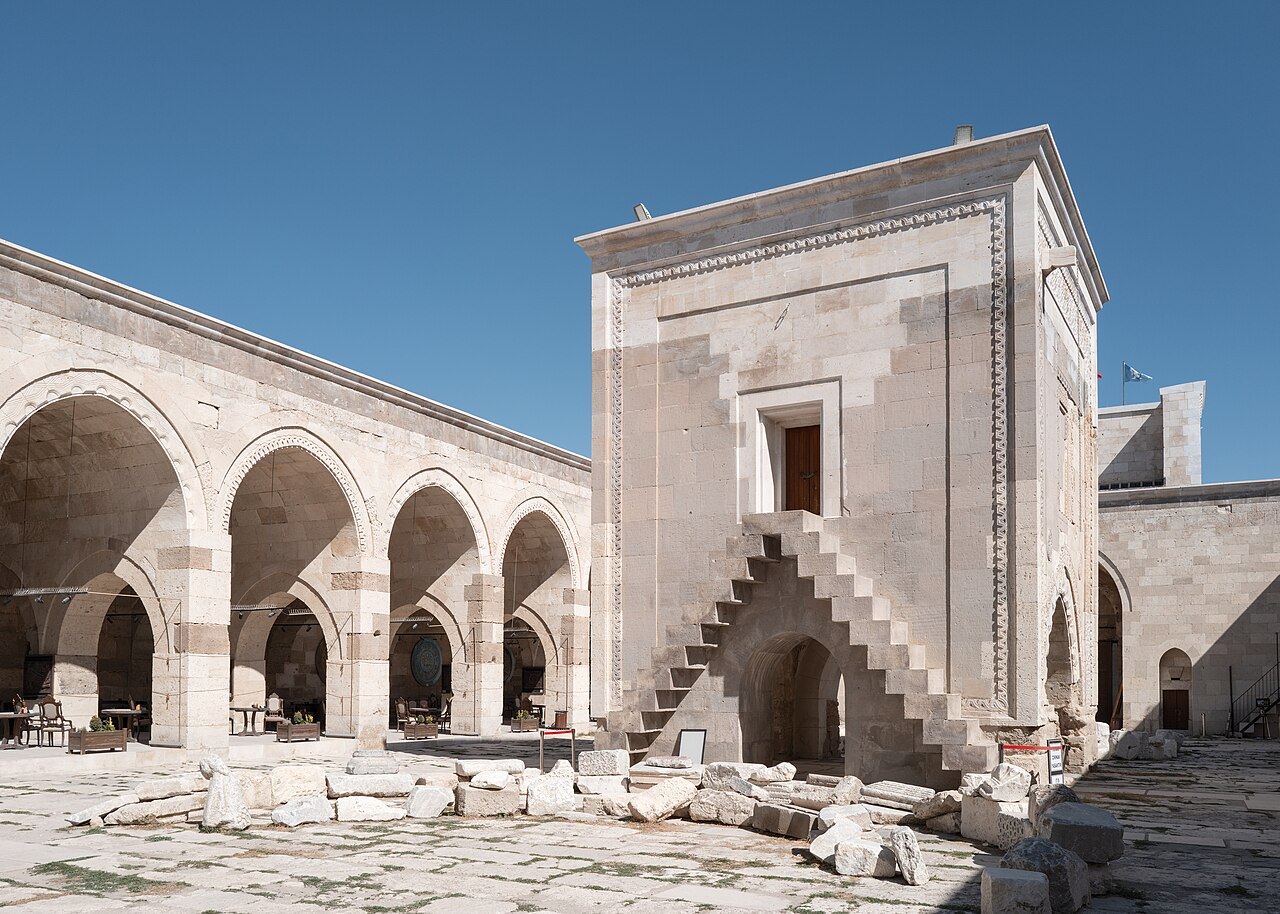
Aksaray Sultan Han
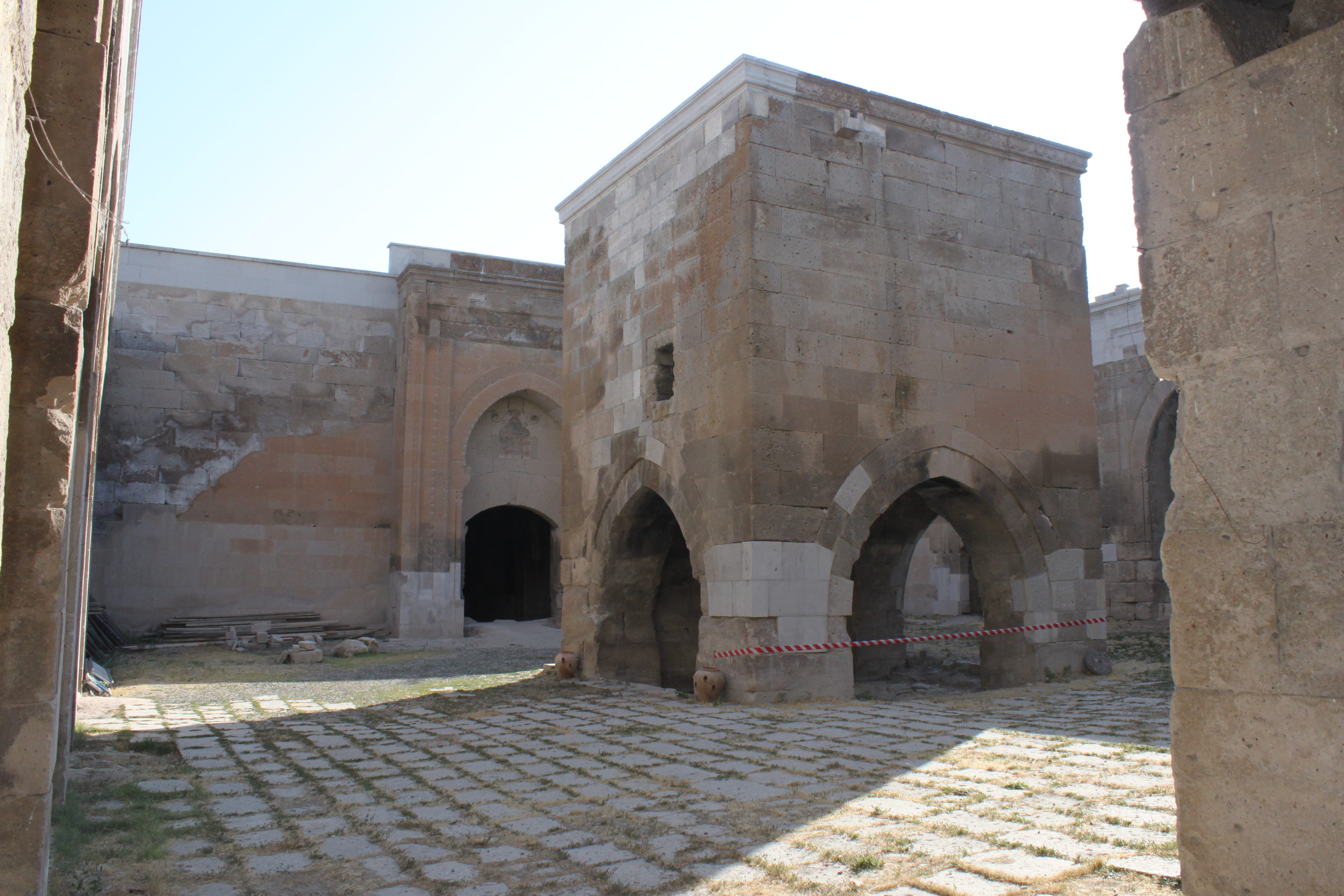
The Geometric Fortress of Ağzıkara Han Caravanserai
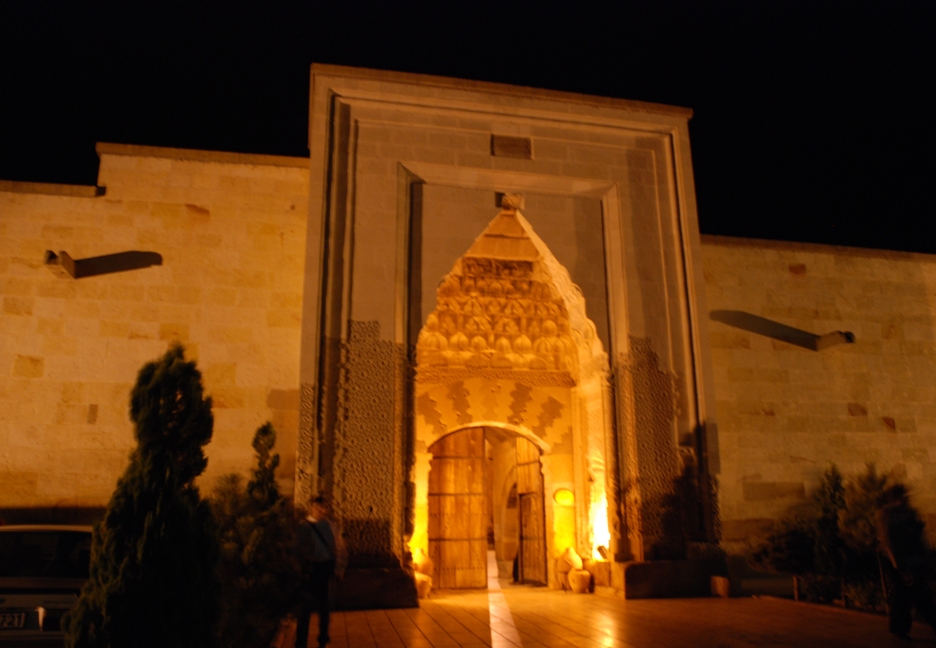
The Last Sultan Caravanserai of the Silk Road: Sarıhan in Avanos
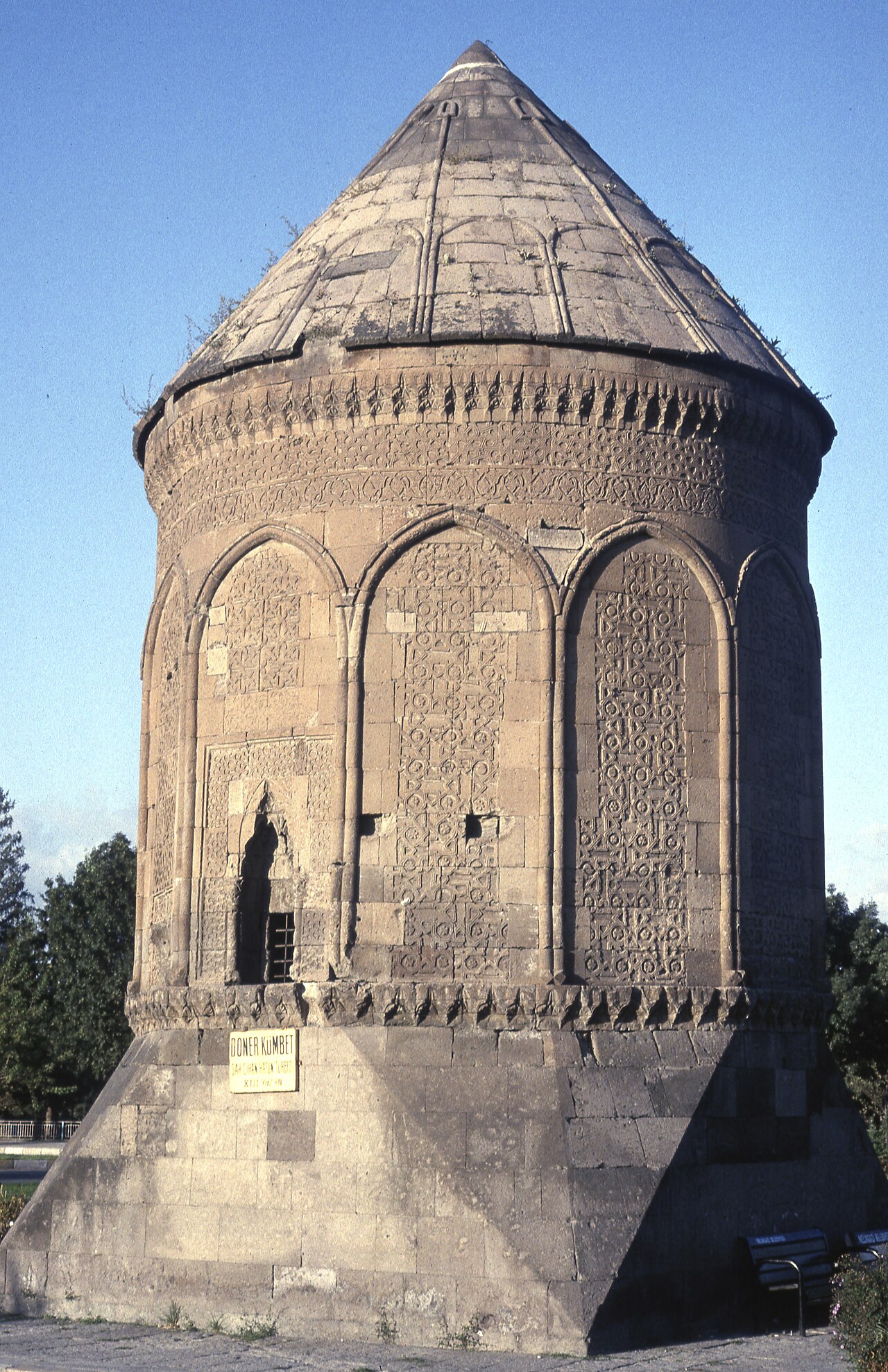
Kayseri Döner Kümbet: Şah Cihan Hatun's Monumental Seljuk Mausoleum
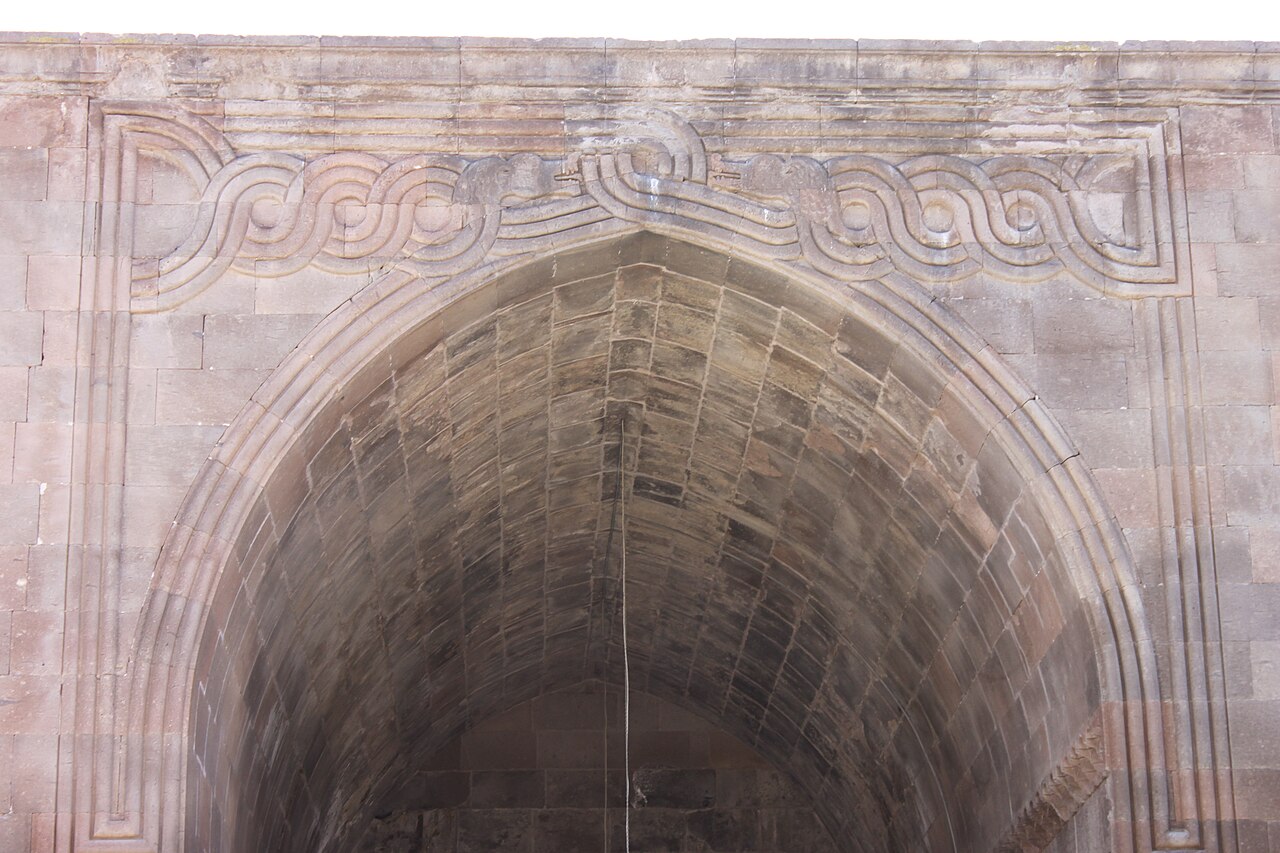
Bünyan Karatay Hanı
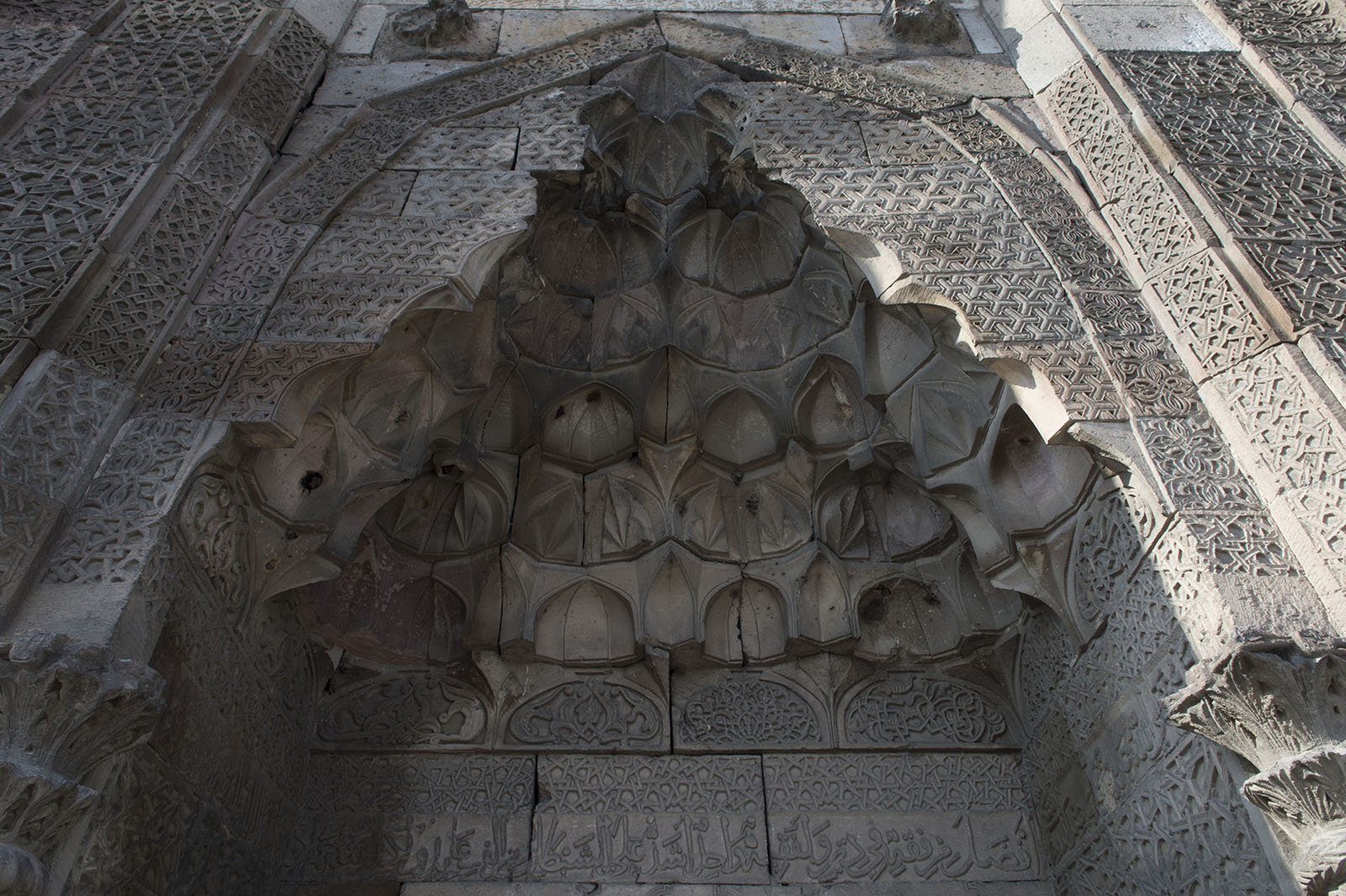
The Stone Geometry of the Anatolian Steppe: Kayseri Sâhibiye Madrasa
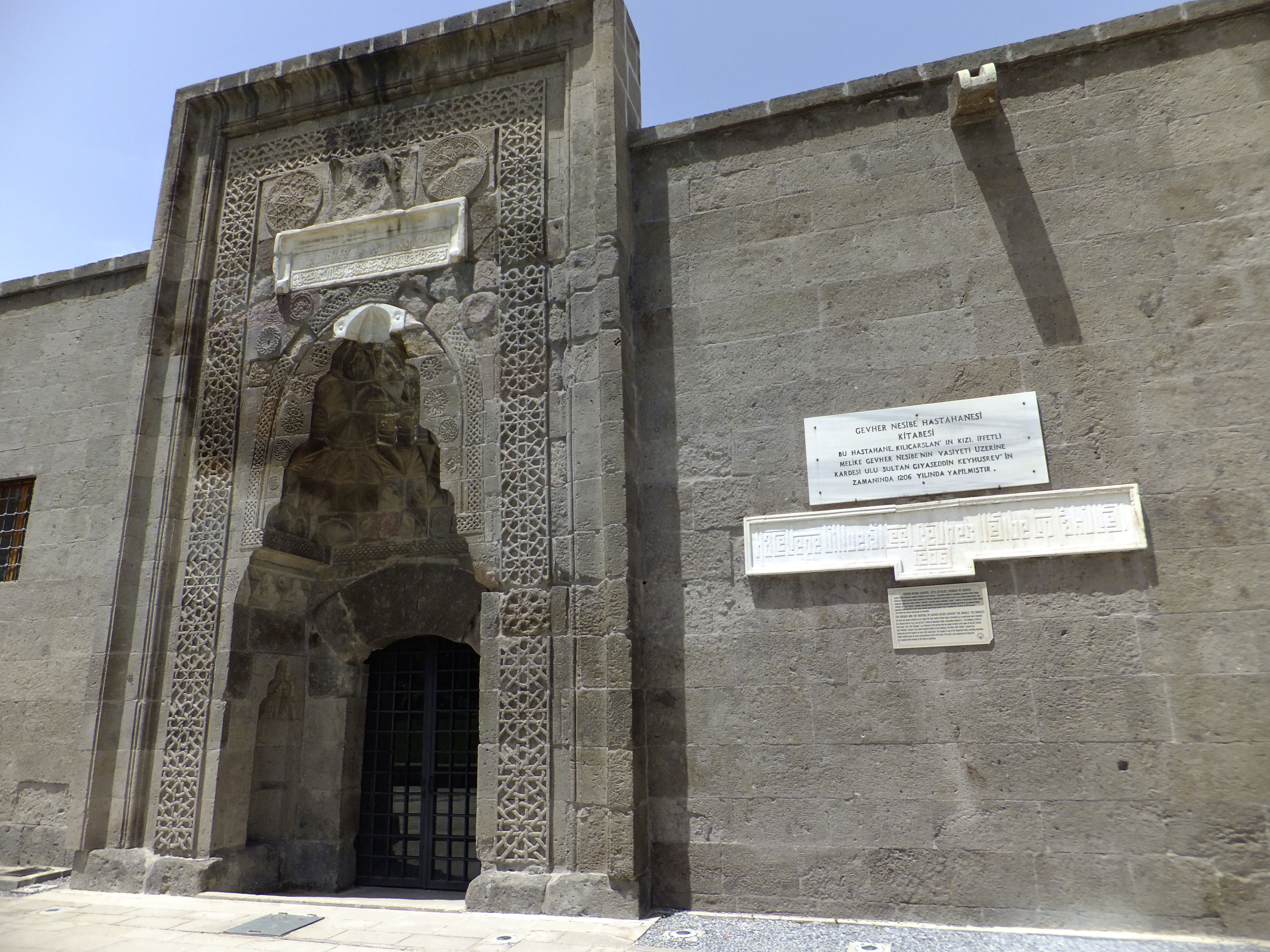
The Twin Monument of Medicine and Mercy: Kayseri Gevher Nesibe Dârüşşifâ
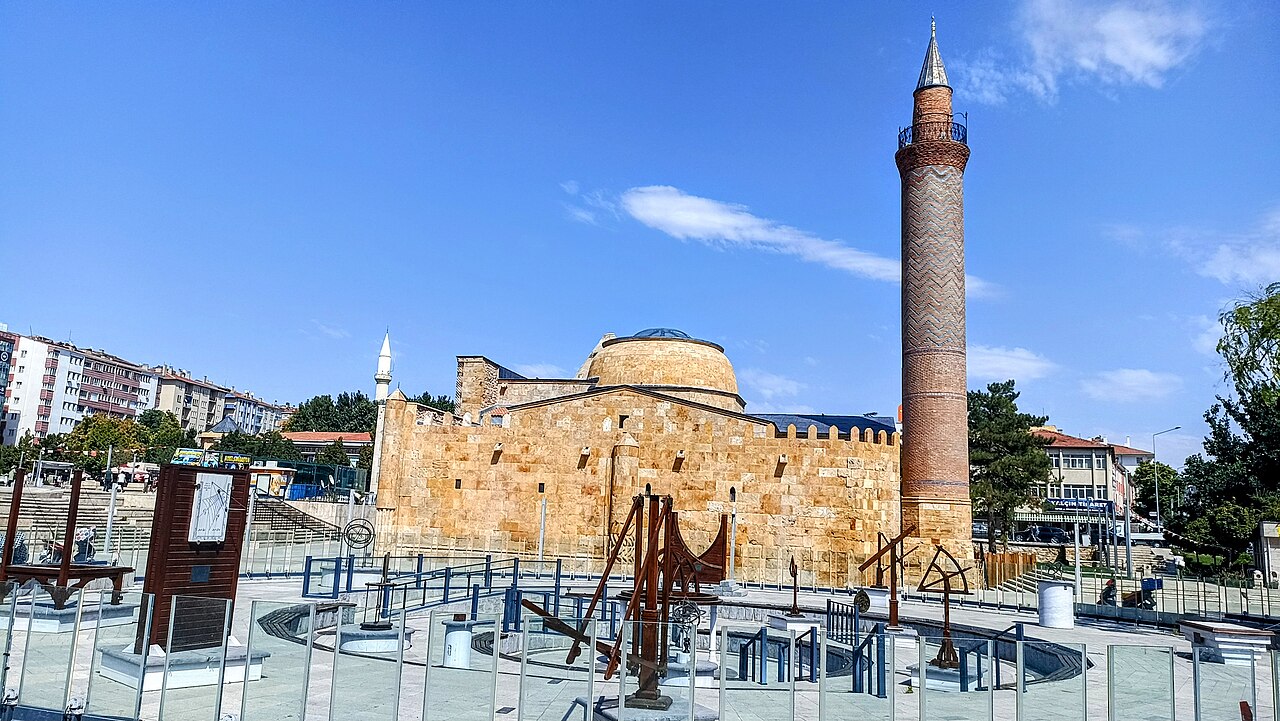
Cacabey Medrese
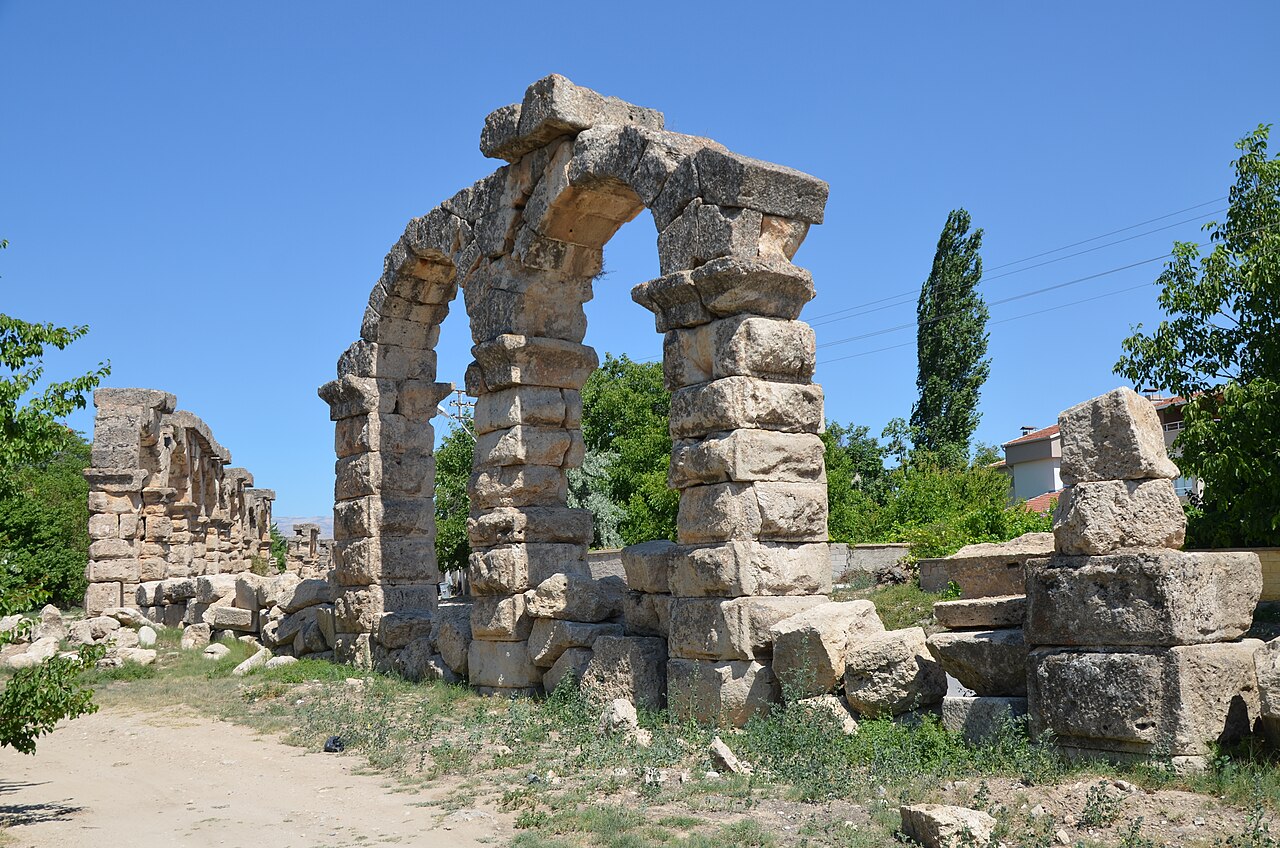
Tyana Aqueducts and Ancient City
This article is compiled from scholarly monographs and official architectural inventories. Please verify site access conditions, visiting hours, and ongoing conservation status via official heritage authorities prior to visiting.