

Summary
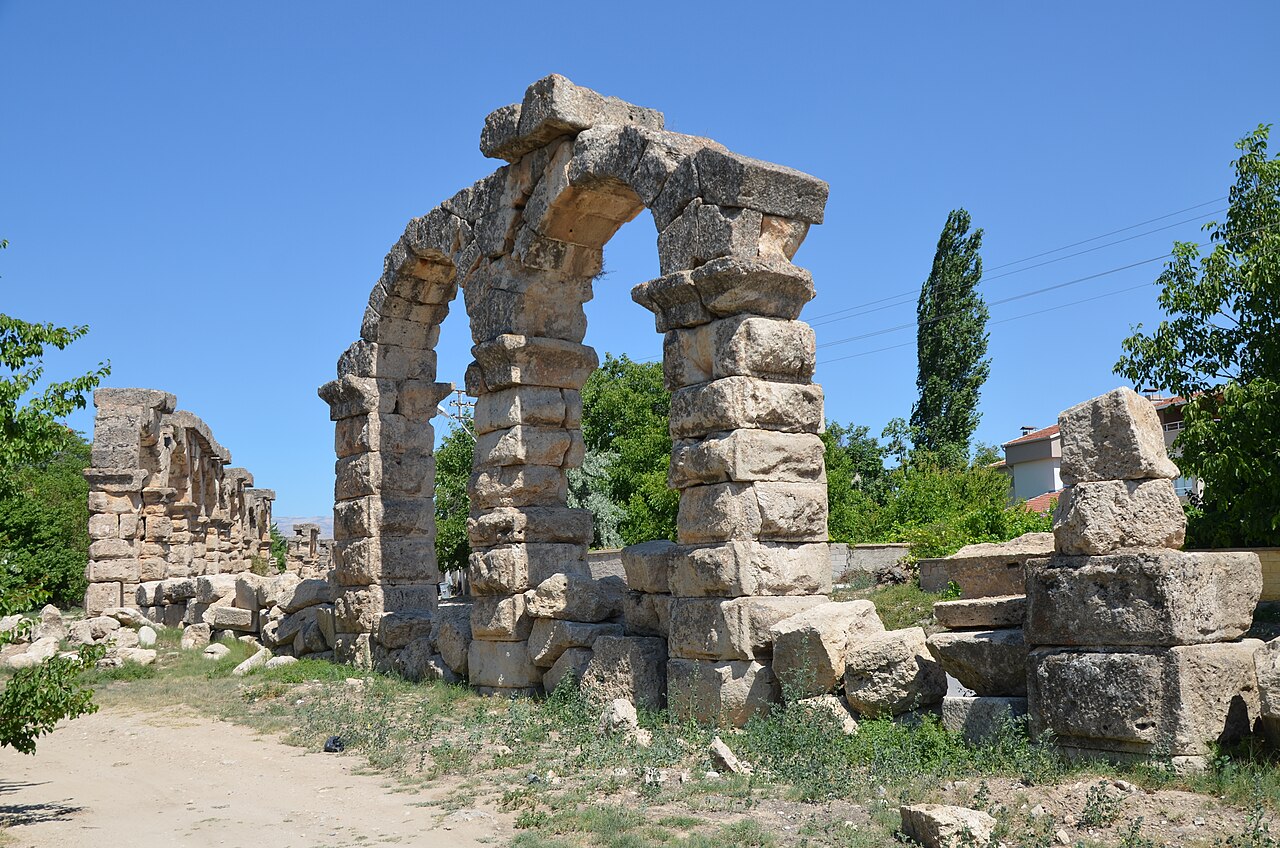
- Structure: Stone aqueduct arches and ancient pool remnants belonging to the central water distribution system of the ancient city of Tyana [1, 2].
- Location: Within the boundaries of Kemerhisar and Bahçeli settlements in Niğde Province [1, 2].
- History and Period: Known as Tuwanuwa during the Hittite period, the city experienced its most significant development during the Roman era (c. 30 BCE–395 CE), including two periods as capital of the Kingdom of Southern Cappadocia [2]. In AD 213, it was established as a Roman colony by Emperor Caracalla [1].
- Hydraulic System: The system originates from the Roman Pool located approximately 4 km northeast of the city [1]. The pool draws water from the Köşk Höyük spring adjacent to it [1]. Water is conveyed via an underground channel from the pool to the Bahçeli area, where it is transferred to the aqueduct arches and delivered to the ancient city through natural slope [1].
- Aqueduct Architecture: Constructed without mortar from roughly hewn large stone blocks in a single layer, the aqueduct arches span approximately 1.2 km [1].
- Archaeological Excavations and Conservation: Scientific excavations have been conducted since 2000 by a team led by Prof. Dr. Guido Rosada of Padova University, Italy [2]. By 2021, conservation projects including surveying, restitution, and restoration of the aqueducts were completed with support from the Ministry of Culture and Tourism and the Turkish Historical Society [1].
Location
The ancient city of Tyana lies largely beneath the majority of Kemerhisar village [2]. The most significant surviving remnants defining modern-day Kemerhisar are these aqueduct arches [1].
The Roman Pool, serving as the origin point of the city’s water system, is located approximately 4 km northeast within the boundaries of Bahçeli [1, 2]. The aqueduct route begins within the village and extends to the Roman Pool in Bahçeli [2].
The entire site is protected as a first-, second-, and third-degree archaeological sanctuary [2].
History
Occupied since the early half of the 2nd millennium BCE, the city was known as Tuwanuwa during the Hittite period and Tyana during the Roman era [1, 2]. Due to its position as a crossroads between Eastern and Western civilizations, it has been repeatedly destroyed and subjected to modern urbanization; however, its water infrastructure—pools and aqueducts—remains largely preserved [1].
Tyana reached its zenith during the Roman period [1], when it functioned as a major city with palaces, temples, and aqueducts, serving twice as the capital of the Kingdom of Southern Cappadocia [2]. Archaeological evidence from Hadrianus to the Severan dynasty demonstrates the city’s significance during the Roman Empire [1]. In AD 213, it was declared a Roman colony by Emperor Caracalla, with various urban development projects undertaken during his reign [1].
Dating of the aqueducts presents conflicting information: the Niğde Provincial Directorate of Culture and Tourism notes they date to the 2nd century CE under Hadrian and Trajan [2]. However, archaeological findings from excavations at the Roman Pool, channels, and aqueducts, alongside ancient sources, indicate construction began in the early 3rd century CE [1].
Important sculptural works and architectural fragments found throughout the village are exhibited at Niğde Museum [2].
Architectural Description and Hydraulic System
The Tyana water distribution system represents a central engineering structure addressing urban water needs during the Roman Empire [1].
- Roman Pool and Köşk Höyük Spring: The system originates from the Roman Pool located approximately 4 km northeast of the city [1]. The pool draws its water from the adjacent Köşk Höyük spring [1]. Notable for its size and marble cladding, the pool functions both as a water collection reservoir and a monumental structure [1].
- Underground Channel System: Water collected in the pool is not directly conveyed to the city via aqueducts [1]. Instead, it is transported through an underground channel from the pool to Bahçeli, where it transitions to the aqueduct arches [1]. Remnants of this water channel have been documented during research [1].
- Single-Layer Stone Aqueduct Arches: Water is transferred from the underground channel to the aqueduct arches and delivered to the ancient city via natural slope [1]. Spanning approximately 1.2 km, the aqueduct arches are constructed without mortar from roughly hewn large stone blocks in a single layer [1]. These structures reflect the political authority of Rome and fulfilled the city’s water needs [1].
- Remnants within Urban Fabric: While the ancient city was a major urban center with palaces, temples, and settlements, most remnants lie beneath Kemerhisar village. The aqueduct arches and Roman Pool in Bahçeli remain as preserved structures accessible to modern visitors [1, 2].
Visit Notes
The Tyana aqueducts are located within the open spaces of the Kemerhisar settlement and can be examined throughout the day. The route connecting the monumental Roman Pool in Bahçeli with the aqueducts in Kemerhisar offers an on-site perspective of Roman hydraulic architecture for travelers interested in this field.
Sculptural works and architectural fragments found in Kemerhisar are exhibited at Niğde Museum [2].
No information regarding visiting hours or access conditions is provided in sources.
References
- [1] General Assessment of the Aqueducts and Roman Pool of Ancient Tyana — Hüsamettin Hayri Şener, Kısmet Bacak, Osman Doğanay (Nevşehir Hacı Bektaş Veli University Social Sciences Journal, 2023) — https://dergipark.org.tr/tr/pub/nevsosbilen/article/1323267
- [2] Tyana Archaeological Site — Niğde Provincial Directorate of Culture and Tourism — https://nigde.ktb.gov.tr/TR-74408/oren-yerleri.html
Konum
Harita: © OpenStreetMap katkıcıları. Haritada büyüt · Google Haritalar · Apple Haritalar
İşaret yaklaşık konumu gösterir; kesin konum için yerel kaynaklara bakın.
This article is compiled from scholarly monographs and official architectural inventories. Please verify site access conditions, visiting hours, and ongoing conservation status via official heritage authorities prior to visiting.
.jpg)