
Summary
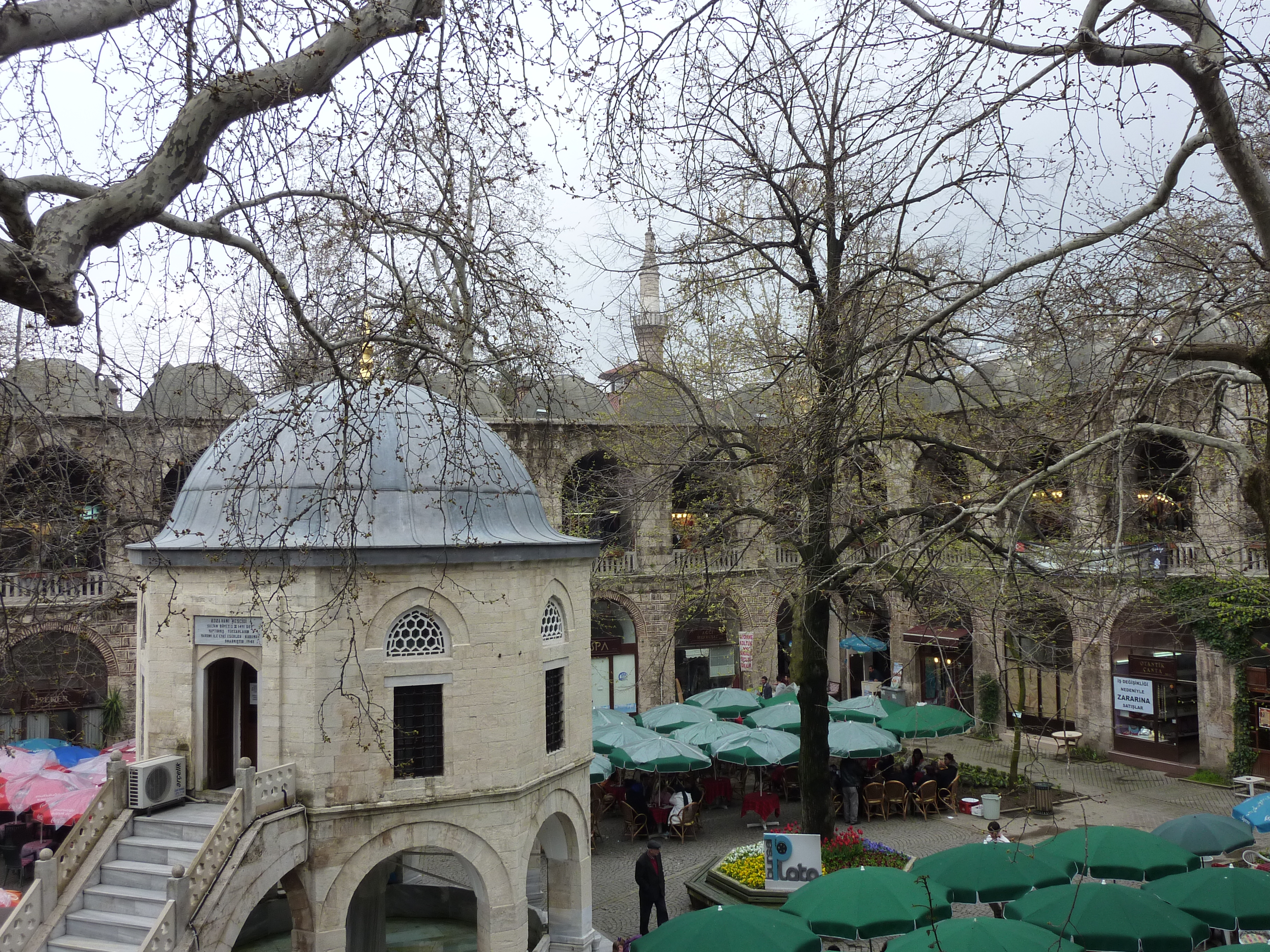
- Structure: A hexagonal-plan royal tomb belonging to 15th-century Turkish architecture [1, 2].
- Location: Located in Bursa within the expansive courtyard of Muradiye Mosque, alongside Sultan II. Murad’s tomb [1].
- History and Builder: Originally constructed for Şehzade Mustafa, eldest son of Fatih Sultan Mehmed who died in 1474; records from Bursa court registers indicate construction completed in 1479 [1]. After a tumultuous exile, Cem Sultan died in Italy in 1495. His remains were repatriated in 1499 and interred here, leading to the tomb’s subsequent association with his name due to its prominence [1].
- Coffins: Four coffins are housed within the tomb: one for Sultan Mustafa, another for Cem Sultan, a third for Abdullah son of Sultan II. Bayezid, and a fourth for Âlemşah son of Sultan II. Bayezid [1]. Due to absence of fixed inscriptions on the coffins, definitive attribution remains uncertain [1].
- Plan and Entrance: Constructed as a hexagon with each side measuring 7 meters [1, 2]. The entrance is flanked by marble-clad walls forming a vestibule (dehliz), which opens outward via a Turkish arch. Above this expansive dehliz rises a multi-tiered wooden cornice [1].
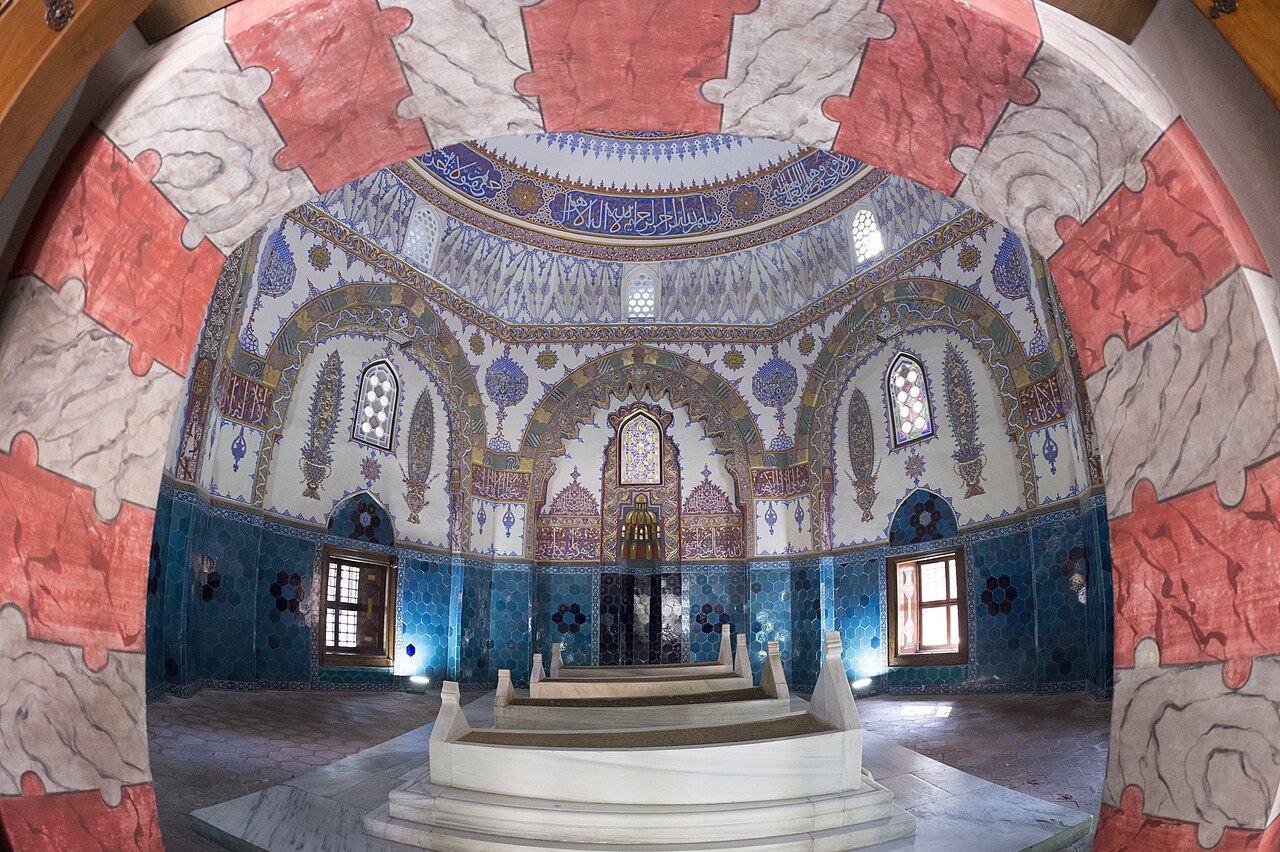
- Ornamentation and Tiles: Walls are covered with gold-gilded framed hexagonal lapis lazuli tiles up to the level of the upper sills of lower windows [1, 2]. Upper wall sections, arches, stringcourses, and dome are entirely adorned with calligraphic arabesques [1].
Location
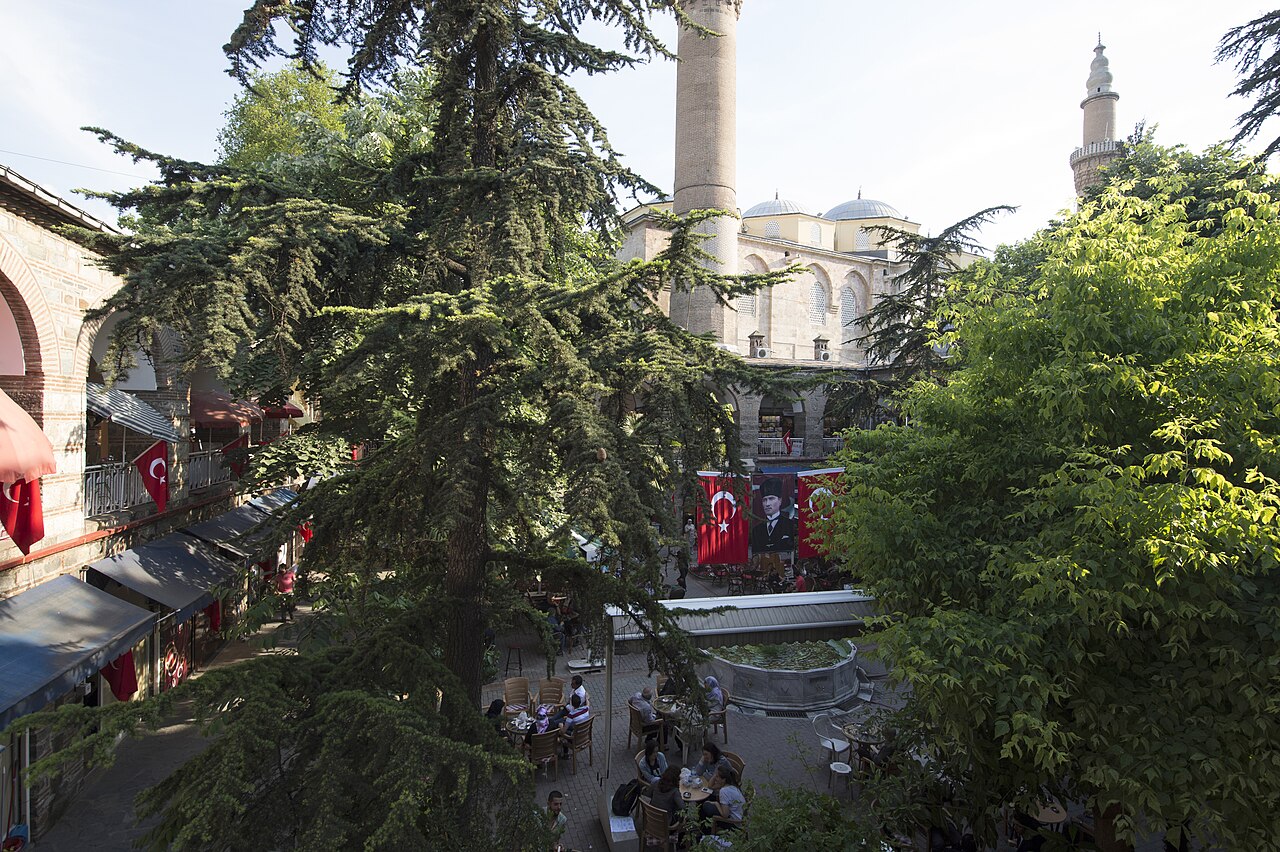
Cem Sultan Tomb is situated within the expansive courtyard of Muradiye Mosque in Bursa, which also contains Sultan II. Murad’s tomb [1].
As typical of Turkish architecture in Bursa, stone and brick were used as construction materials [1]. After two courses of brickwork, a single course of stone was laid with a vertical brick placed between the stones [1].
The entrance is organized as a marble-clad vestibule (dehliz) [1]. This expansive dehliz opens outward via a Turkish arch, with a multi-tiered wooden cornice rising above it. Windows are also present in the side walls [1].
History
The attribution of the inscription-less tomb is discernible from the cartouches within the dome’s calligraphic panels bearing the name “Sultan Mustafa” and the phrase “rahmetullah” inscribed between rosettes [1]. Based on these inscriptions, the structure was constructed for Şehzade Mustafa, eldest son of Fatih Sultan Mehmed who died in 1474 [1]. From Bursa court records, it is accepted that Şehzade Mustafa Tomb was completed in 1479 [1].
Fatih’s other son, Cem Sultan, died in Italy in 1495 after a tumultuous exile [1]. After his remains were repatriated in 1499 and interred here, the tomb became known by Cem Sultan’s name due to its prominence [1].
According to reports from the Haremeyn waqf inspectors, in 1795 (Hijri 1209), investigations were conducted for the restoration of the deteriorated tomb’s leadwork, canopy covers, and finials [1].
At one point, the rich calligraphic panels within the tomb were covered with paint [1]. During his tenure as governor of Bursa, Vali Ahmed Vefik Pasha discovered the original inscriptions beneath the paint layers and had them restored [1].
Architectural Features and Interior Decoration
Cem Sultan Tomb is considered among the most refined structures in terms of interior decoration within the Muradiye complex [1]. As a whole, it reflects the artistic and aesthetic principles of 15th-century Turkish interior decoration [1].
- Bursa Arches and Prismatic Transitional Triangles: Each interior wall surface features flattened four-centered “Bursa arches” [1]. Within these arches, a mihrab is oriented toward the qibla, while the other five sides contain paired windows [1]. The dome transition is achieved through prismatic transitional triangles (bademler / almond-shaped corbels) encircling the hexagram drum [1].
- Lapis Lazuli Tiles: Walls are covered with hexagonal lapis lazuli tiles up to the level of the upper sills of lower windows [1, 2]. A limited number of dark indigo tiles are also used [1]. Each tile is framed with gold-gilded borders and features a central stamped gold-gilded rosette [1]. The border strips contain floral and rûmî motifs [1].
- Mihrab Ornamentation: The mihrab’s muqarnas corbeling is adorned with indigo-colored tiles [1]. On either side of the mihrab, within niches, are inscribed müsennâ besmeles with “Allahü hâliku külli şey’ ve hüve âlâ külli şey’” in large sülüs script below [1]. The mihrab wall is fully adorned with inscriptions and arabesques without any gaps [1].
- Calligraphic Arabesques: Upper wall sections and the dome are entirely covered with calligraphic arabesques [1, 2]. At the base of the dome, the noble besmele and Âyetü’l-kürsî are inscribed [1]. The dome surface is adorned with hatâyî and rûmî motifs; the phrase “rahmetullah” is repeated twelve times between six rosettes [1]. On windowed walls, stylized plant and vine motifs emerging from double-horned vases on either side of upper windows are present. These motifs are found to protrude 2–5 millimeters from the wall surface [1].
- Wooden Carved Doors: The wooden carved door panels of the tomb exemplify the quality of woodworking craftsmanship of the period [1, 2].
Visit Notes
The tomb is located within the expansive courtyard of Muradiye Mosque in Bursa. The complex area of Muradiye district is accessible for walking through its gardens throughout the day.
For detailed examination of the lapis lazuli tiles, gold-gilded stamped rosettes, and protruding botanical calligraphic motifs on walls, it is recommended to visit during daylight hours with optimal lighting conditions.
No information regarding visiting hours or entry requirements is provided in sources.
References
- [1] Cem Sultan Tomb — TDV İslâm Ansiklopedisi (Prof. Dr. Semavi Eyice, 1993) — https://islamansiklopedisi.org.tr/cem-sultan-turbesi
- [2] Tombs (Cem Sultan Tomb) — Bursa Provincial Culture and Tourism Directorate — https://bursa.ktb.gov.tr/TR-70244/turbeler.html
Konum
Harita: © OpenStreetMap katkıcıları. Haritada büyüt · Google Haritalar · Apple Haritalar
İşaret yaklaşık konumu gösterir; kesin konum için yerel kaynaklara bakın.
This article is compiled from scholarly monographs and official architectural inventories. Please verify site access conditions, visiting hours, and ongoing conservation status via official heritage authorities prior to visiting.