
Summary
- What is it? An open-courtyard, single-iwan, two-story medrese forming a small külliye with a mosque and tomb chamber [2].
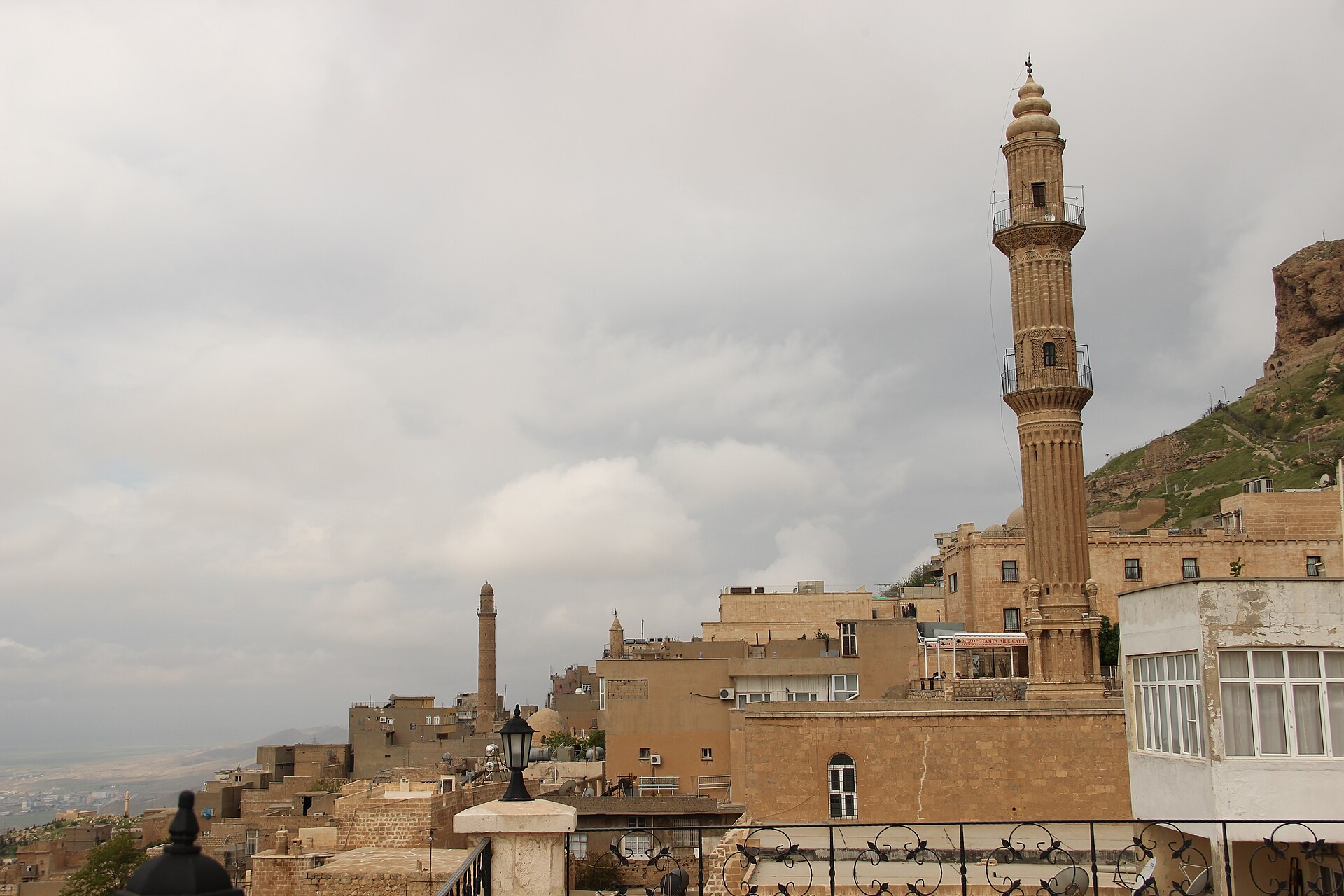
- Where is it? Located on a slope overlooking the Mesopotamian plain in southwest Mardin [2].
- When was it built? Construction began during the Artuqid period and was completed during the Akkoyunlu era; exact dates remain uncertain [1], [2].
- Why is it significant? Recognized as one of the few surviving medreses in Mardin retaining its original form [1].
The Structure on the Slope
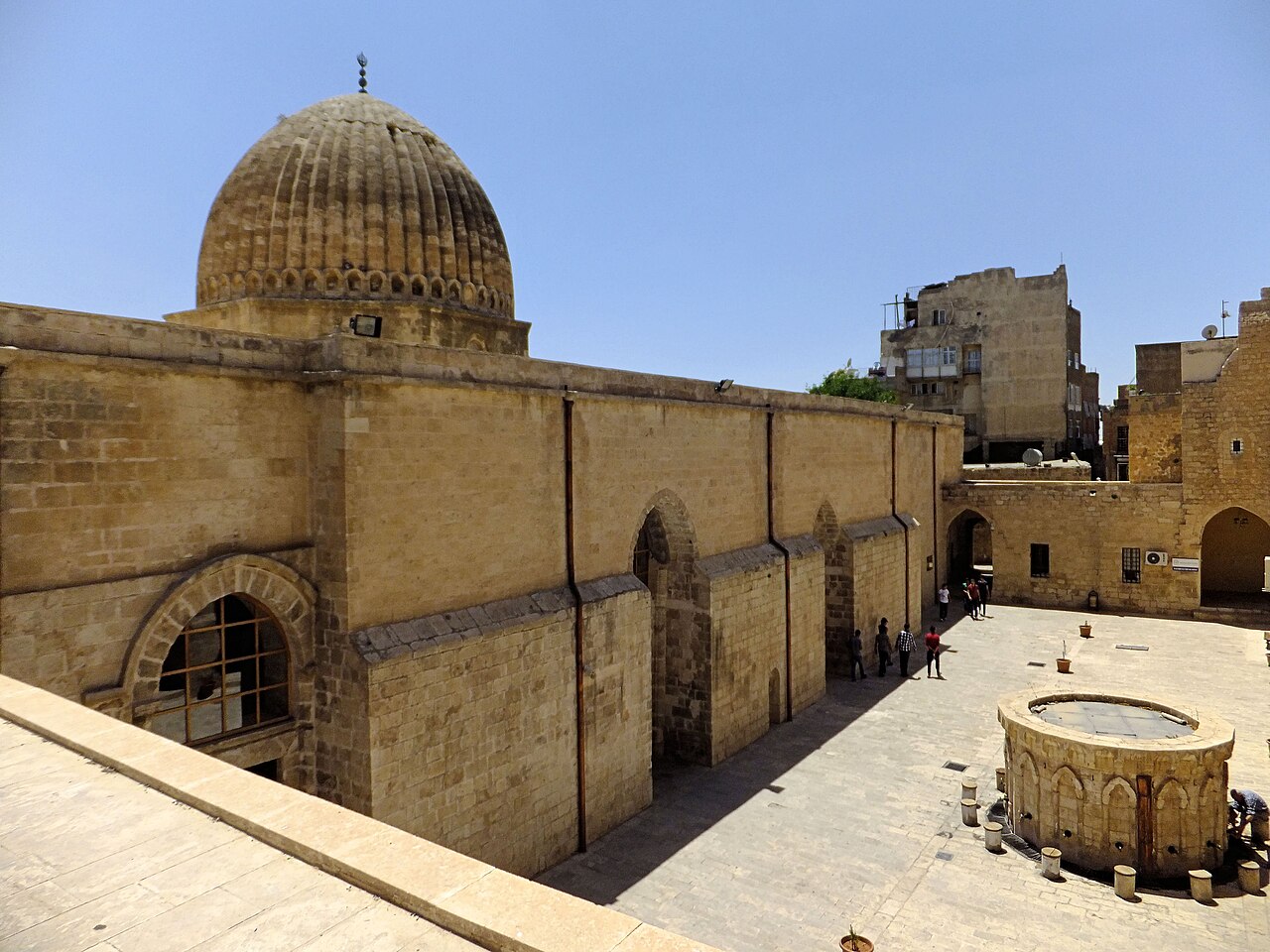
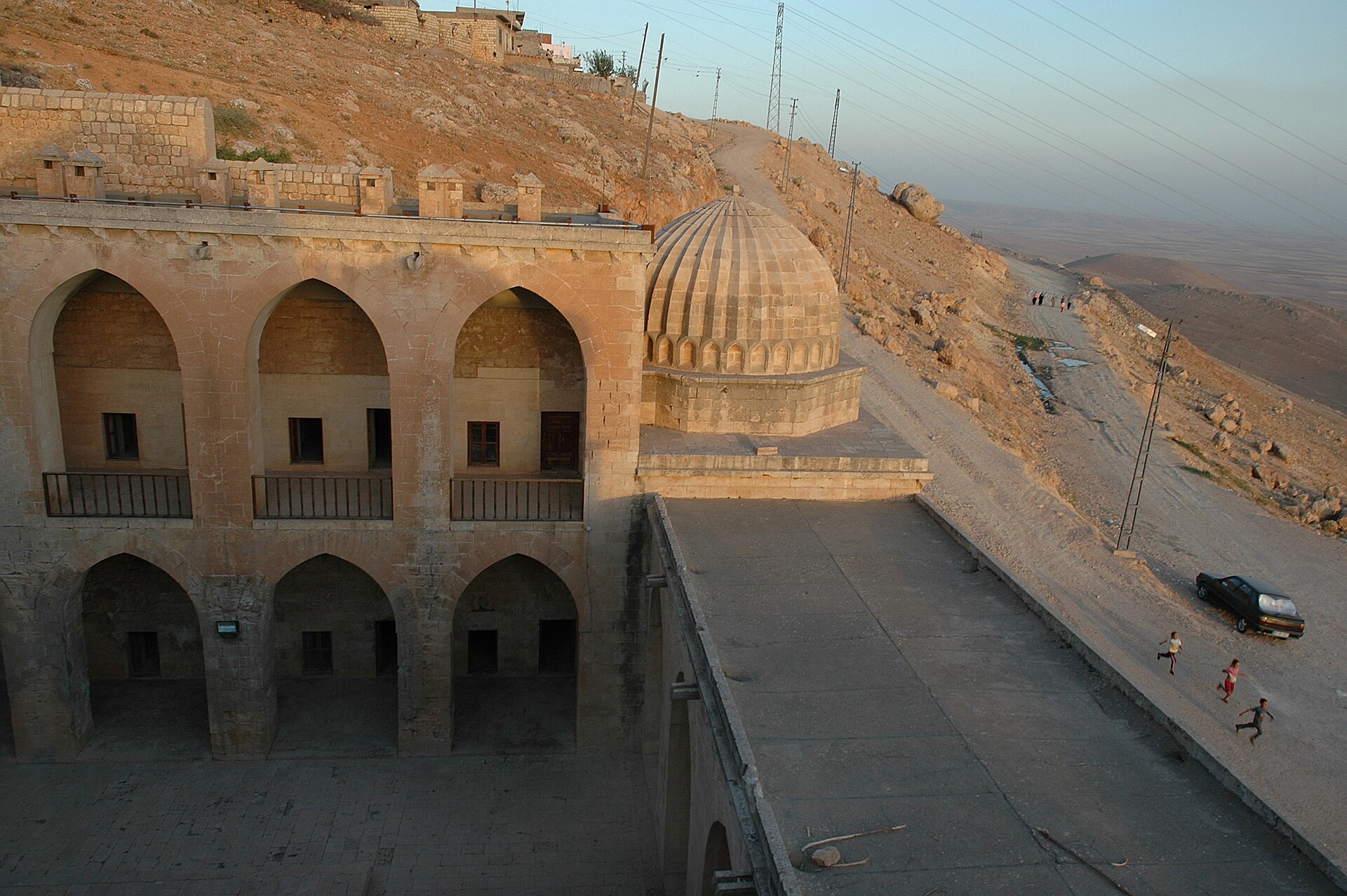
The structure occupies two terraces on the slope, with its façade oriented southward toward the plain [2]. Constructed of cut stone and brick, access is via a pointed barrel vault corridor from the southern façade’s central portal, leading to a vaulted courtyard [2].
Twenty-three rooms surround the courtyard: eleven on the ground floor and twelve on the upper level [2]. A large iwan cuts through the second floor to the north, with a square pool in front; water flows into it via an aqueduct system from a fountain [2]. A separate mosque is located west of the courtyard, while a two-story mosque occupies the east side [2]. In the southwest corner of the courtyard lies the tomb chamber, covered by a segmented dome containing two symbolic sarcophagi attributed to Sultan Kasım and his sister [2].
The height of the classroom portals exceeds one meter slightly [2]. The reason for this remains unclear; some interpretations associate it with respect through students bowing upon entry, though this is speculative.
Interpreting Its Chronology
Sources do not uniformly agree on Kasımiye’s age, necessitating cautious dating.
- No inscriptive tablet survives on the medrese itself, prompting careful handling of chronological claims [2].
- Mardin Provincial Directorate of Culture and Tourism states construction began during the Artuqid period and was completed between 1457–1502 under Cihangiroğlu Kasım Padişah of the Akkoyunlu, after whom it is named [5].
- The Kur’an Encyclopedia entry notes construction initiated in the 13th century during the Artuqid period, halted by Timurid invasions, and completed between 1457–1502 under Sultan Kasım, dating the structure to 1469 and attributing its name to him [2].
- Murat Çağlayan of Mardin Artuklu University (2016) identifies it as a structure commissioned by Sultan Kasım Bey, nephew of Akkoyunlu Uzun Hasan, in the late 15th century, noting parallels with the 1385-built Zinciriye Medrese [1].
What Was Taught Here?
The medrese operated until World War I, later serving briefly as a military barracks during and after the war [2]. By the 16th century, it was among Mardin’s wealthiest waqf endowments, funded by property rentals and village shares [2]. Non-theological disciplines such as medicine, astronomy, mathematics, and chemistry were reportedly taught alongside religious sciences; natural sciences were taught on the first floor while theological subjects occupied the second [2]. All these claims derive from secondary sources, with no primary documentation of the curriculum.
Current Condition
The structure remained abandoned for decades; restoration attempts in 1964 and 1990 proved unsuccessful, though cultural use was recently reintroduced [2]. According to a April 2026 report, the medrese served military purposes until 1940, later restored as a museum [3]. The Kur’an Encyclopedia refers to it as the Cizye Art Museum [2].
Its current usage differs: since 2020, Mardin Artuklu University has operated it as an Islamic Science and Arts Center; per the same report, five classrooms host undergraduate and graduate courses in tourism, architecture, theology, and fine arts five days a week, with tourism students receiving practical training and the site open to local and international visitors [3]. The Mardin Provincial Directorate of Culture and Tourism lists it among visitable sites but provides no specific usage details [5].
Kasımiye also appears on the 2026 Mardin Cultural Route Festival’s venue list; event specifics can be tracked via the festival’s official page [4].
Visit Notes
- The structure occupies two terraces on a slope; comfortable footwear is recommended.
- Opening hours and admission details are available via Mardin Provincial Directorate of Culture and Tourism’s website [5]. Verify these in advance, as the site may host classes.
References
- [1] Murat Çağlayan, “Akkoyunlu Cultural Heritage in Anatolia: Mardin Kasımiye Medrese,” ICNASE’16 Conference Proceedings, Mavi Kitap Yayıncılık, 2016 — Mardin Artuklu University record page — https://gcris.artuklu.edu.tr/entities/publication/536911c7-8d34-4446-93cb-f5e767cbd21f
- [2] “Kasımiye Medrese,” Muhammed Samed Acar — Kur’an Encyclopedia — https://kureansiklopedi.com/tr/detay/kasimiye-medresesi-11083
- [3] Historic Kasımiye Medrese Reopened as an Educational Hub — TRT Haber, April 2026 — https://www.trthaber.com/haber/turkiye/tarihi-kasimiye-medresesi-yeniden-egitim-yuvasina-donustu-942461.html
- [4] Mardin Cultural Route Festival 2026 event list — Türkiye Kültür Yolu Festivali — https://kulturyolufestivali.com/etkinlikler?Festival=mardin-kultur-yolu-festivali-2026
- [5] Kasımiye Medrese — Mardin Provincial Directorate of Culture and Tourism — https://mardin.ktb.gov.tr/TR-311570/kasimiye-medresesi.html
Konum
Harita: © OpenStreetMap katkıcıları. Haritada büyüt · Google Haritalar · Apple Haritalar
İşaret yaklaşık konumu gösterir; kesin konum için yerel kaynaklara bakın.
This article is compiled from scholarly monographs and official architectural inventories. Please verify site access conditions, visiting hours, and ongoing conservation status via official heritage authorities prior to visiting.